Choosing the Right AI Agent Harness
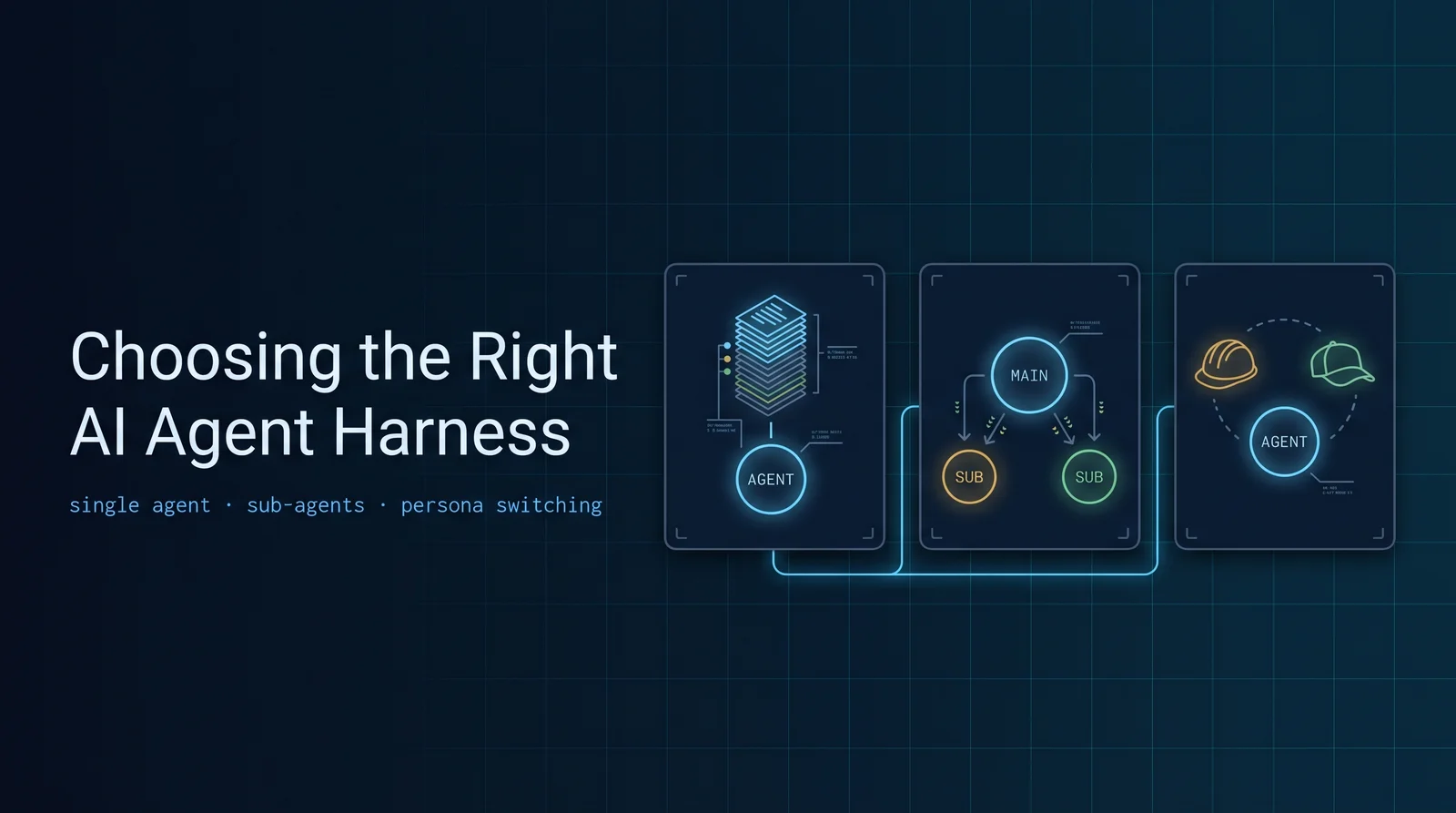
Single agent, sub-agents, or persona switching: what I've learned building all three, and when I reach for each one.

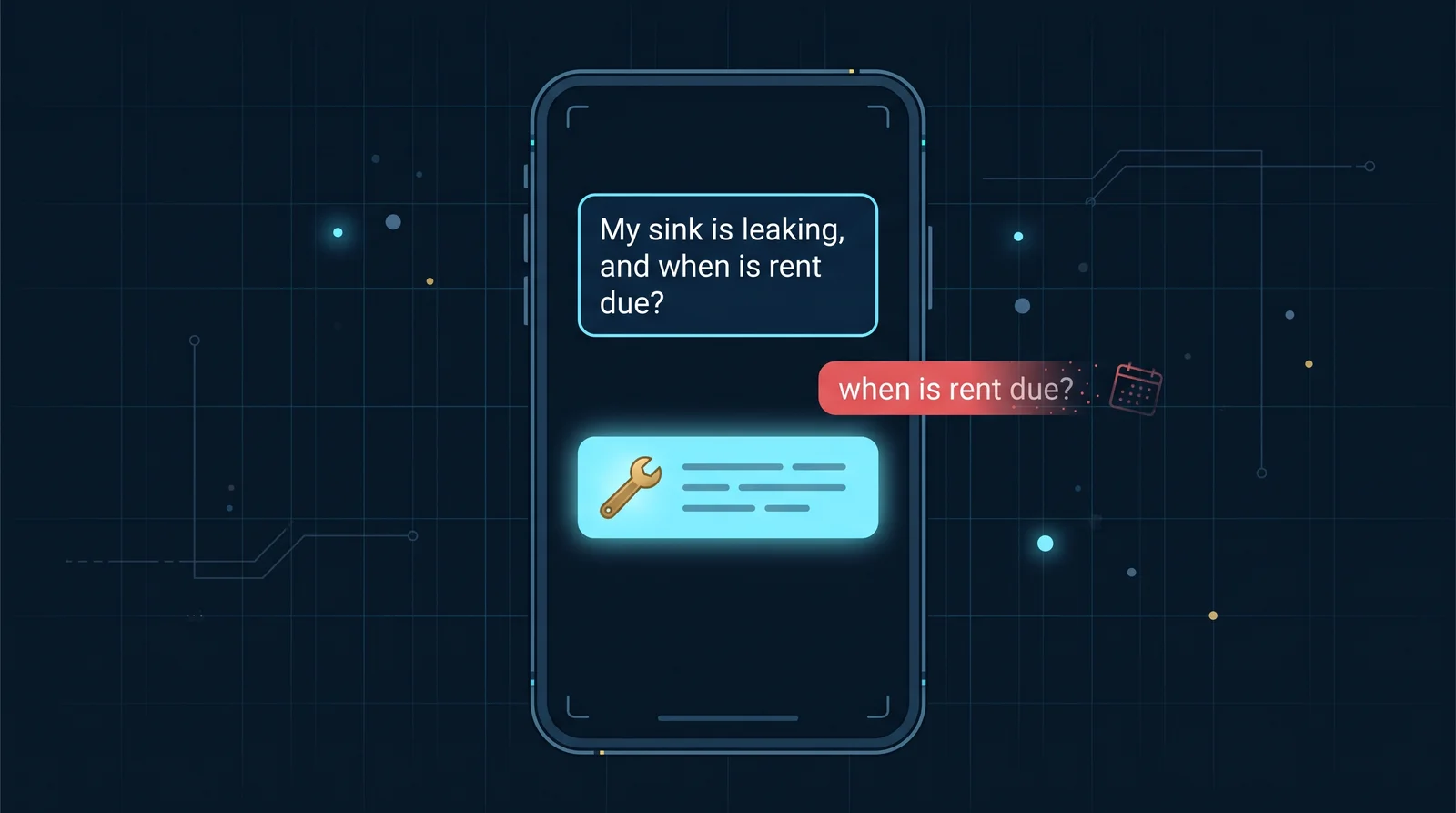
You've probably had this happen. You ask an assistant two things at once, like "My sink is leaking, and when is rent due?" It walks you through the sink, and the rent question just disappears. Or the answer takes a beat too long, or it comes back in a shape that doesn't fit what you asked.
That moment is rarely the model's fault. A model is a very powerful horse. Without the right harness it just runs all over the place: fast, impressive, and no use to anyone. Put it in a harness and that same strength pulls the cart where you need it to go.
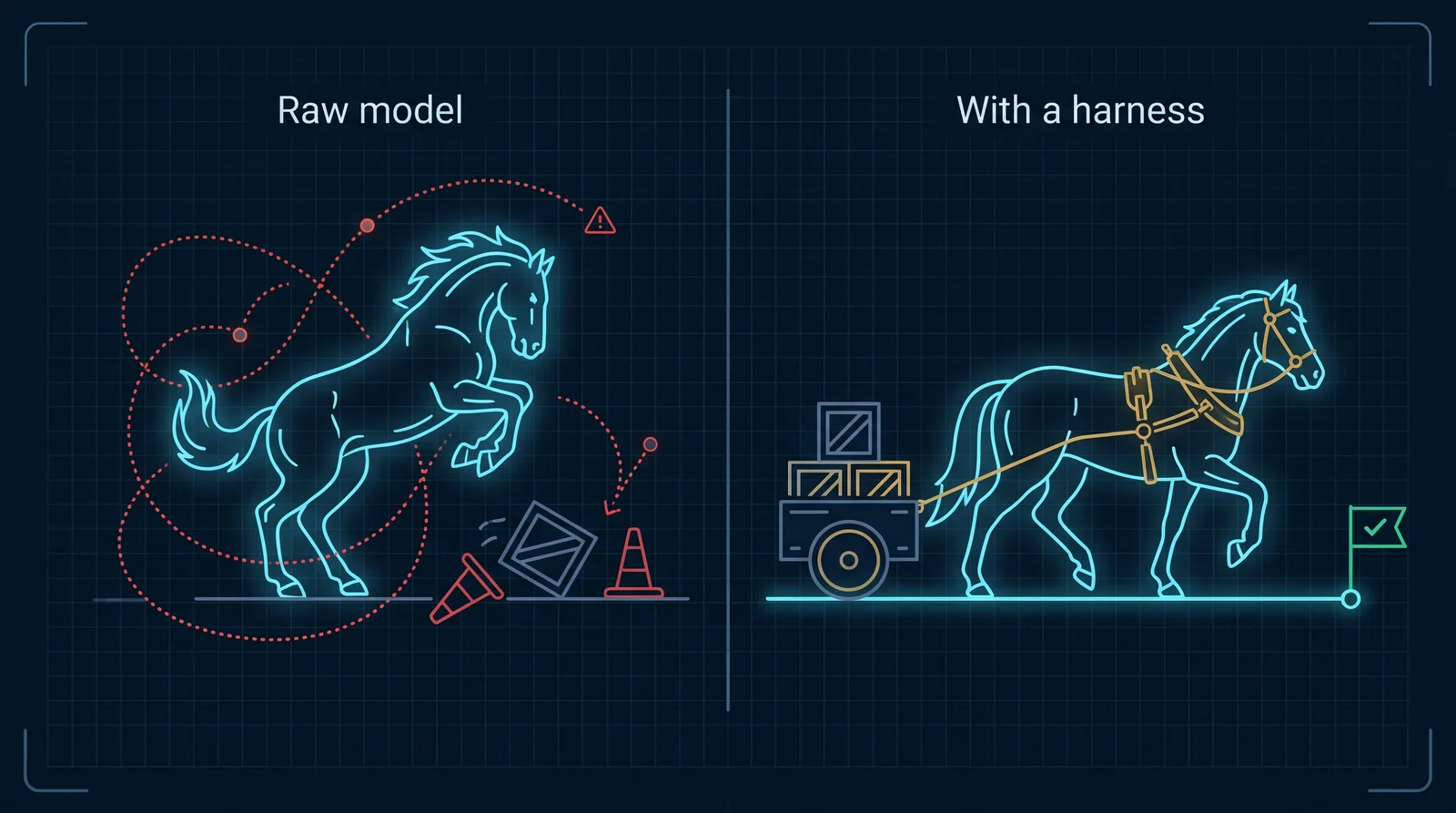
That's what's usually missing. It's the harness: the code around the model that decides what it sees, which tools it can reach, who answers, and when a turn is finished.
I've built three kinds of harnesses across MagicDoor, Agent Parley, LoreStage and Revoco. Each has real strengths, and each has trade-offs. Here's how I think about them, and when I reach for each one.
1. The classic single agent
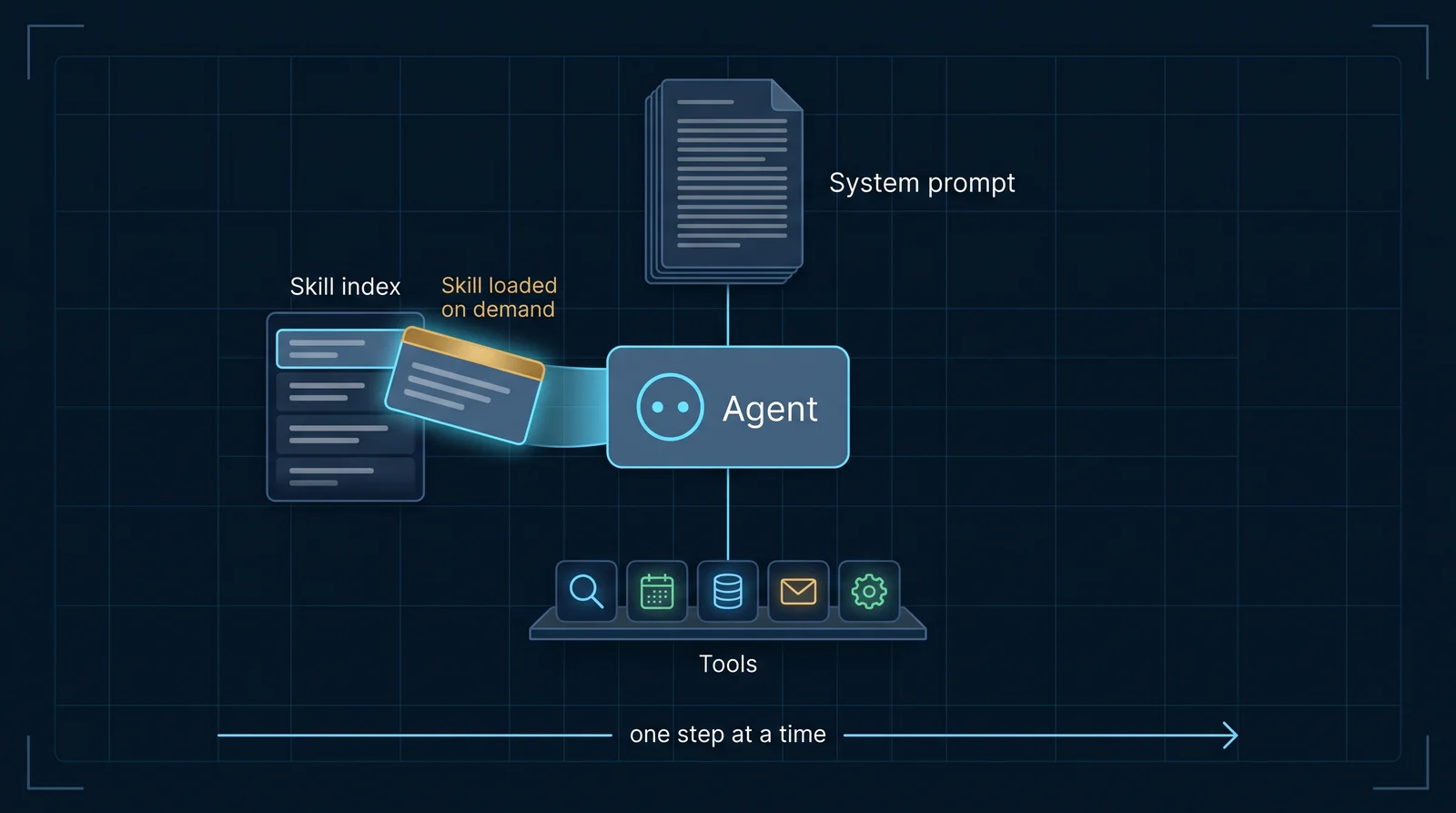
What it is. One agent, one big system prompt, and tools behind it. Everything runs in sequence: read the message, think, call a tool, think again, reply.
It doesn't have to be naive. Our property-manager assistant at MagicDoor, Genie, is a single agent. Its prompt doesn't carry every procedure. It carries an index of skill names, and the agent loads the full steps for a skill only when it decides to act. One turn runs under one lock, so a second message that arrives mid-turn can't trip over the first.
Strengths
- Very quick to prototype. You can have something useful in an afternoon.
- Simple to reason about. There's one prompt, one transcript and one place to look when something goes wrong.
- Easy to debug, because everything happens in order.
Trade-offs
- It doesn't scale well. Every new capability adds to the same prompt and the same tool list, and sooner or later you'll move to sub-agent delegation or persona switching.
- It doesn't work for voice. Once a voice agent has real complexity, one agent doing everything in sequence is too slow and too crowded to hold a natural conversation.
2. Sub-agent delegation
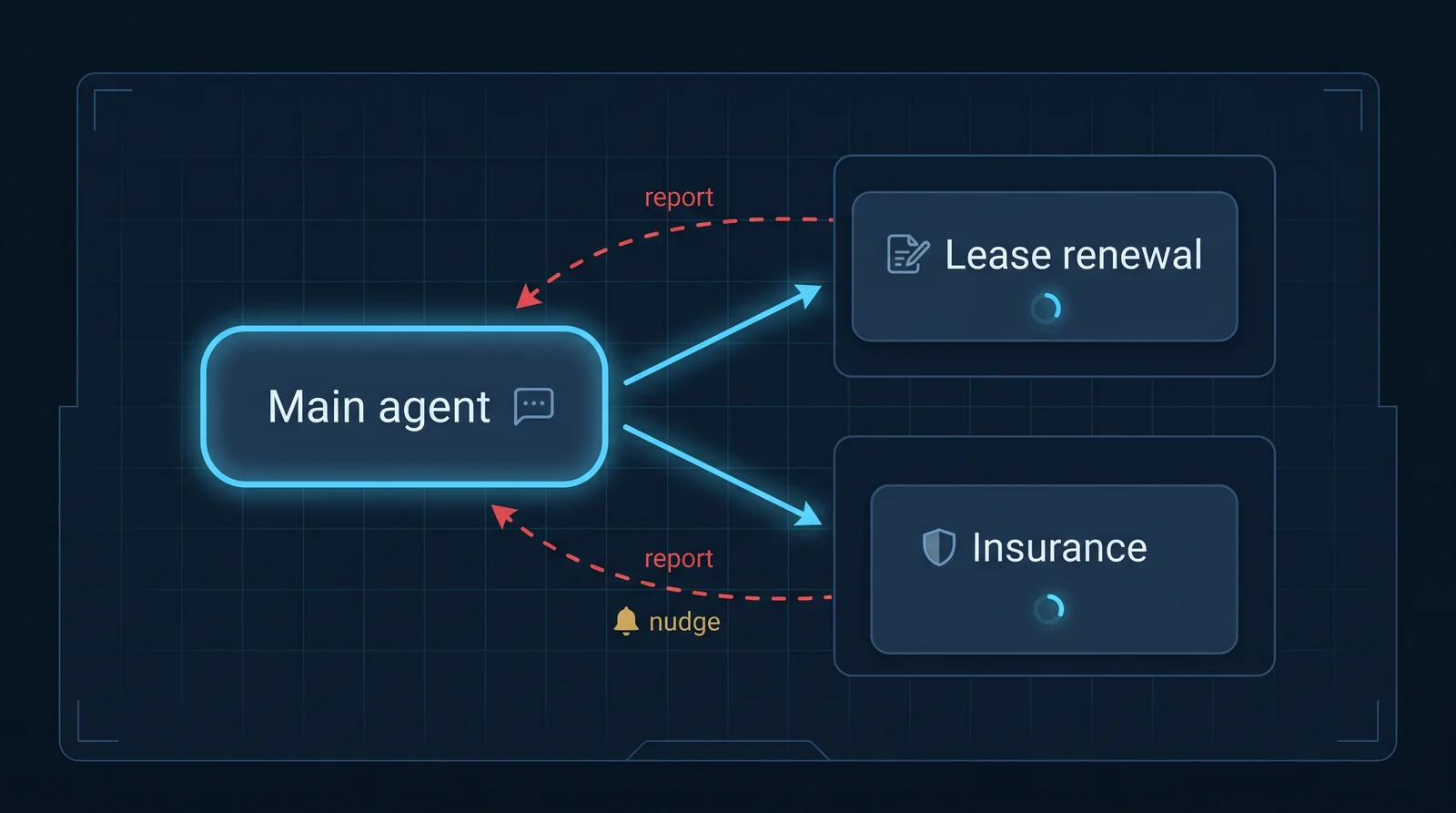
What it is. A main agent talks to the user and spawns specialist sub-agents for focused work. They run in parallel and report back. At MagicDoor, the tenant-facing agent can hand off to specialists like lease-renewal and insurance while it keeps the conversation going.
This is my default choice, unless I need speed. Two reasons:
- Modularity and scoped knowledge. Each specialist is focused precisely on what it does and how it should answer. The insurance agent knows insurance. It doesn't carry the lease-renewal rules, and it can't get confused by them.
- Isolated testing. You can test the insurance agent by itself, with no other agents in the loop. With a single agent or persona switching, you test through the main agent as a whole.
Other strengths
- Parallel and long-running work.
- A clean data boundary. A specialist can read data the speaking agent should never repeat, because the specialist never talks to the user directly. In our tenant chat, ending its turn is how a specialist delivers its report, and that's its only way out.
Trade-offs: coordination. Agents forget to reply. A child finishes its work, writes the answer somewhere it shouldn't, and the parent never hears about it. That's what nudges are for: small messages from the harness that remind an agent what it still owes.
Nudges alone weren't enough, though. In Agent Parley, a child agent once wrote its answer as plain text instead of reporting it, ignored the reminder, and its parent sat waiting forever. The old nudge cost an extra model turn, and the model could simply ignore it. So we changed the approach to owed-reply settlement. The platform tracks that a child owes its parent a reply and settles that debt in code. If the child finishes without reporting, the parent is told plainly, and it never has to guess.
3. Persona switching
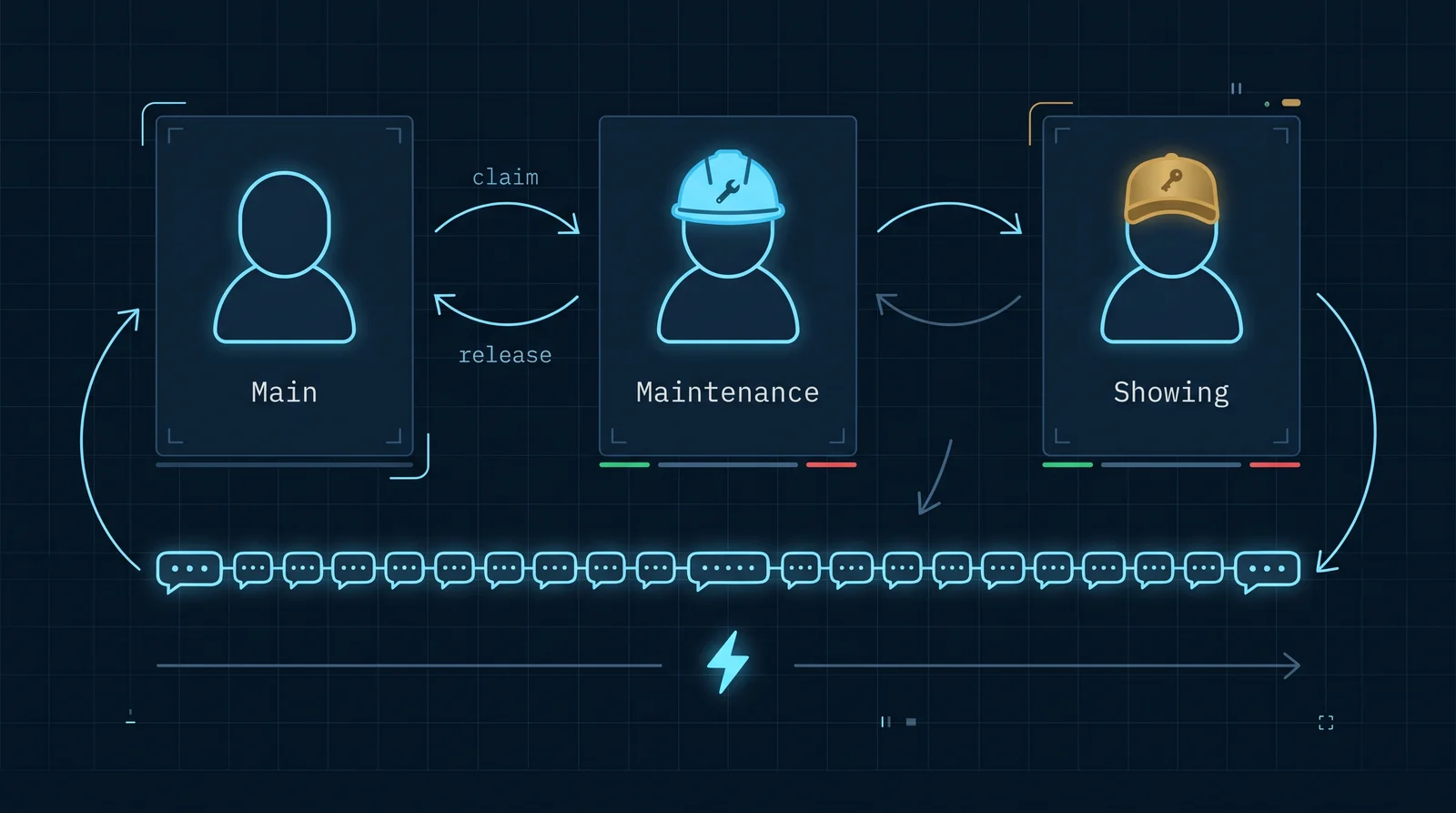
What it is. There's one session and one conversation. Instead of spinning up a new agent, the harness swaps the prompt and the tools in and out, and the full context stays.
In Genie's Desk, our voice product at MagicDoor, a specialist persona like Maintenance or Showing claims the conversation when the topic calls for it. It keeps it until it hits something outside its lane, then releases it back to the main agent. The tenant hears one continuous conversation, and the right expertise is always the one speaking.
Strengths
- Low latency. There's no second agent to start up and no report to wait for.
- It's the harness that really works for voice, especially as the agent gets more complex.
- The conversation stays whole: the specialist sees what was said, and the main agent picks up where the specialist left off.
Trade-offs
- It runs in sequence: only one persona speaks at a time, so there's no parallel work.
- Each swap changes the system prompt, which resets the prompt cache. For voice, that's a cost worth paying.
4. How to implement each harness
Classic single agent
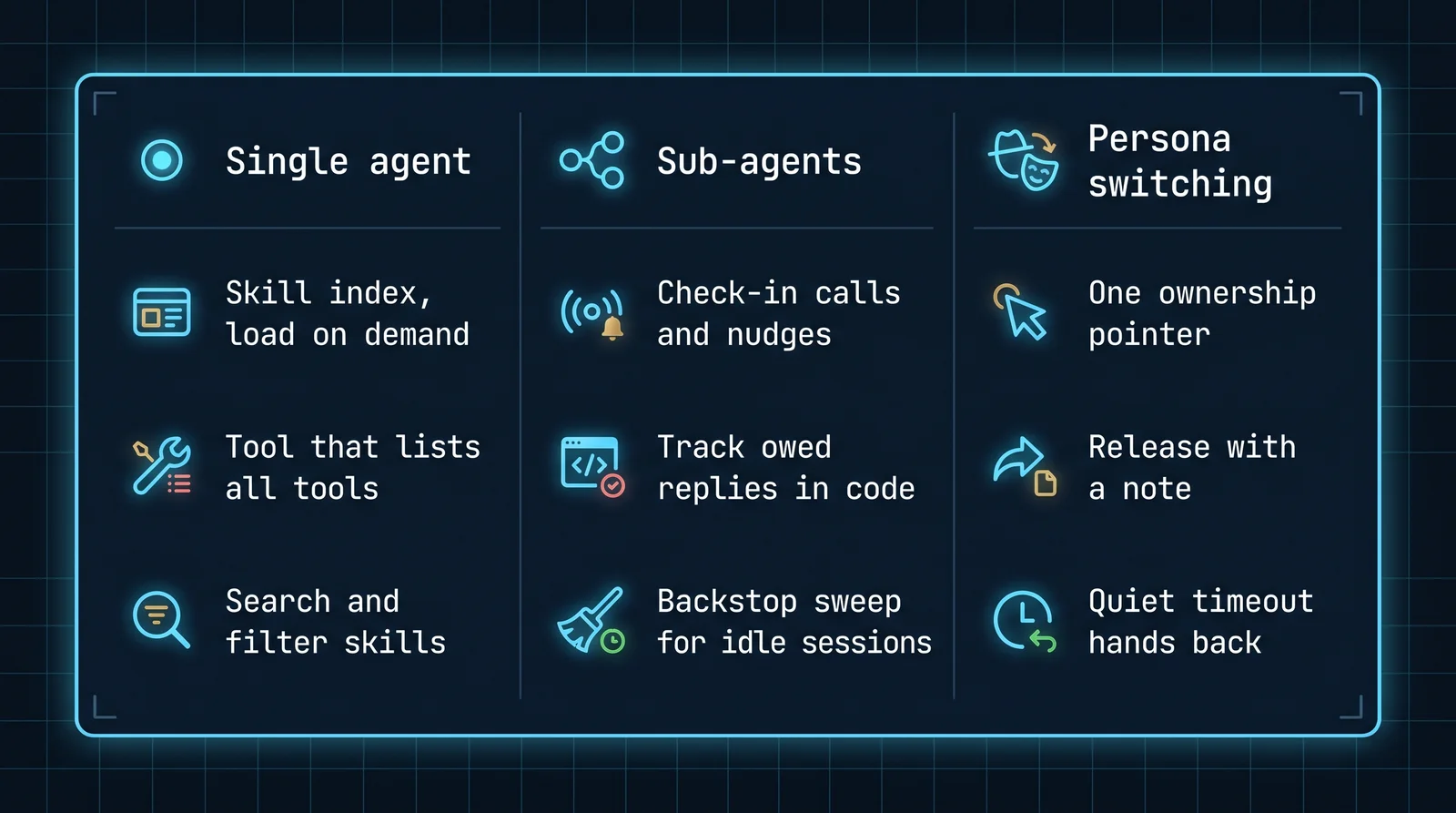
- Skills on demand. Keep a short index of skill names in the prompt and load a skill's full steps only when the agent decides to act. Trigger on intent to act, not on a topic mention, and write skills as numbered steps.
- A tool that lists the tools. Give the agent a tool call that returns all available tools, so it can discover capabilities instead of carrying them all in the prompt.
- Search and filter. As skills and tools grow, add search and filter tooling so the agent loads the right skill rather than all of them.
- Keep the prompt stable. Leave volatile data like the clock or the to-do list out of the system prompt so the provider's prompt cache keeps working across turns.
Sub-agents: building nudges
- Check-in tool calls. Let a sub-agent send a progress update that isn't its final answer, and let any agent set a timer to wake itself later.
- Detect unfinished turns. Watch for a child that ends without reporting, or an idle agent that still has open work.
- Nudge, with a cap. Remind the agent what it still owes, but cap the repeats so a stuck agent doesn't loop forever.
Sub-agents: never losing a reply
- Track the debt. Mark every child that owes its parent a reply.
- Settle it in code. Don't rely on the model remembering. When the child's work is genuinely done, the harness delivers the result.
- Sweep the backstop. Run a periodic check for idle sessions with unread messages, and for children that still owe something.
- Say it plainly. If a child never reports, tell the parent so it can answer from what it knows or hand off to a person.
Persona switching
- One ownership pointer. The state is simply "who owns this conversation right now."
- An explicit release. The specialist hands back with a note that says plainly what's still unanswered. Once a hand-back note arrived with the user's question, and the main agent just waited on it. "My sink is leaking, and when is rent due?" should still get its rent answer.
- A quiet timeout. If the conversation goes quiet for long enough, ownership lapses back to the main agent.
5. Which one should you reach for?
| Situation | Harness |
|---|---|
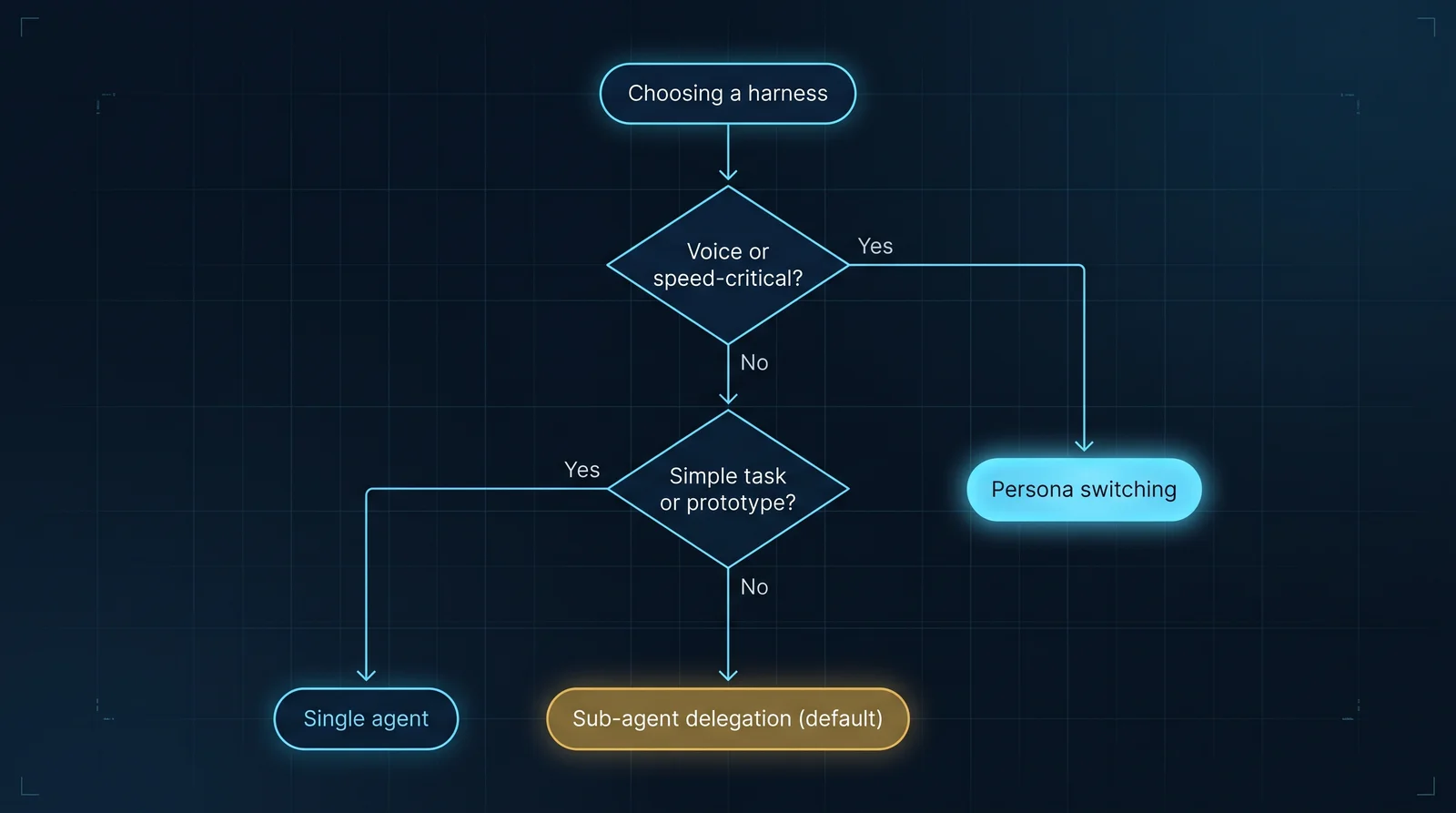
| Most text or async products, especially with parallel work | Sub-agent delegation (the default) |
| Voice, or anywhere speed comes first | Persona switching |
| A simple task or a fast prototype | Classic single agent |
Start simple if you're exploring. Move to sub-agents when the work needs structure, focus and testability. Reach for persona switching when every second of latency is felt.
Closing
Back to the half-answered question. The sink got fixed and the rent question vanished, and that wasn't a model problem. Somewhere in the harness, a hand-off didn't carry what it should have.
As models keep getting better, I think more of the difference between an assistant that feels sharp and one that feels stuck will come from the harness: who speaks, what they know, and how they hand off. Pick the one that fits the job.